

this is test
Gymnastics is a sport that combines strength, flexibility, balance, coordination, and precision. Whether practiced in schools, sports academies, professional training centres, or fitness clubs, gymnastics requires reliable equipment to support athletes during training and performance. Modern gymnastics equipment is designed to improve movement, develop physical skills, and reduce the risk of injuries. Understanding the different equipment types, materials, safety standards, and benefits helps facility owners make informed purchasing decisions.
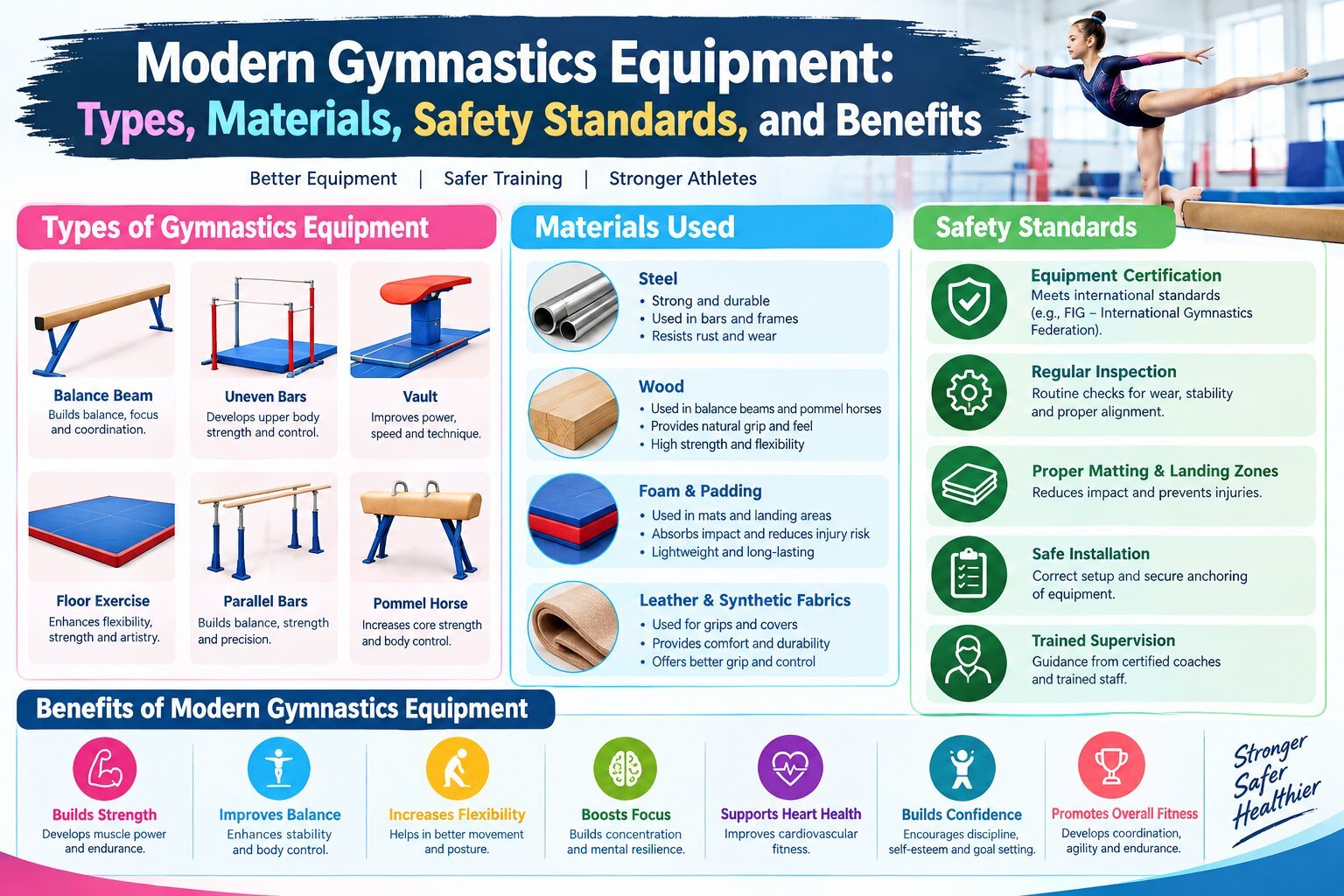
Types of Modern Gymnastics Equipment
Gymnastics includes several disciplines, and each requires specialised equipment to develop particular skills.
1. Gymnastics Mats: Landing mats and floor exercise mats provide cushioning during jumps, rolls, handstands, and other movements. They help absorb impact and provide a stable surface for beginners and experienced athletes.
2. Balance Beams: Balance beams help gymnasts develop body control, concentration, and stability. They are commonly used in training centres and competitive gymnastics facilities.
3. Horizontal Bars and Uneven Bars: These bars support swinging, gripping, and rotational exercises. Their design and height depend on the intended discipline, age group, and training requirements.
4. Parallel Bars and Pommel Horses: Parallel bars are used for strength, balance, and controlled body movements, while pommel horses help athletes practise circular leg movements and coordination.
5. Vaulting Equipment: Vaulting tables and springboards support explosive jumps and controlled landings. They require proper installation, suitable approach space, and appropriate landing mats.
6. Training Accessories: Gymnastics rings, training blocks, foam shapes, spotting platforms, and protective padding help athletes practise techniques progressively under supervision.
Materials Used in Gymnastics Equipment
The materials used in gymnastics equipment influence its strength, durability, comfort, and performance.
- Steel and aluminium: Metal frames and supports provide structural strength. High-quality finishes help protect against corrosion and wear.
- Wood: Plywood and specialised wooden surfaces are commonly used in certain bars, training apparatus, and supporting structures.
- Foam: High-density foam is used in mats and padding to provide cushioning and help absorb impact.
- Rubber: Rubber components can improve grip, stability, and floor protection.
- Synthetic fabrics and coatings: Durable covers, upholstery, and grip surfaces improve comfort and help equipment withstand regular use.
Choosing materials according to the equipment’s purpose, expected load, and frequency of use can improve its service life and reliability.
Safety Standards and Maintenance
Safety should be a priority when selecting and installing gymnastics equipment. Buyers should check applicable standards from recognised organisations, such as the International Gymnastics Federation (FIG), for competition equipment and relevant product specifications. Requirements may differ between recreational, school, training, and competitive settings.
Equipment should be appropriate for the athlete’s age, skill level, and body weight. Frames, joints, fasteners, grips, and landing surfaces must be inspected regularly for damage, looseness, or excessive wear. Mats should be positioned correctly, and equipment must be installed on stable flooring with adequate clearance around the training area.
Coaches should supervise practice, teach proper techniques, and ensure that athletes use suitable protective equipment. Damaged equipment should be removed from service until it has been repaired or replaced.
Benefits of Modern Gymnastics Equipment
Modern equipment supports structured training and skill development. Mats and padded surfaces provide cushioning, while bars and beams help athletes improve strength, balance, flexibility, and coordination. Adjustable training equipment allows coaches to introduce skills gradually and adapt exercises to different experience levels.
Well-designed equipment can also improve training efficiency by helping athletes practise movements with greater control and consistency. For schools, gyms, and sports academies, investing in durable equipment can support long-term training programmes and provide better value over time.
Conclusion
Modern gymnastics equipment plays an important role in athletic development, training quality, and safety. By understanding equipment types, material choices, maintenance requirements, and relevant safety standards, buyers can create a suitable training environment for beginners and advanced gymnasts alike. When evaluating products from Gymnastics Equipment Manufacturers, consider construction quality, intended use, safety features, and maintenance needs. Meerut Gym recognises the importance of suitable training equipment in supporting effective fitness and gymnastics activities. Choosing the right equipment helps build a safer, more productive environment where athletes can develop their skills and confidence.
